
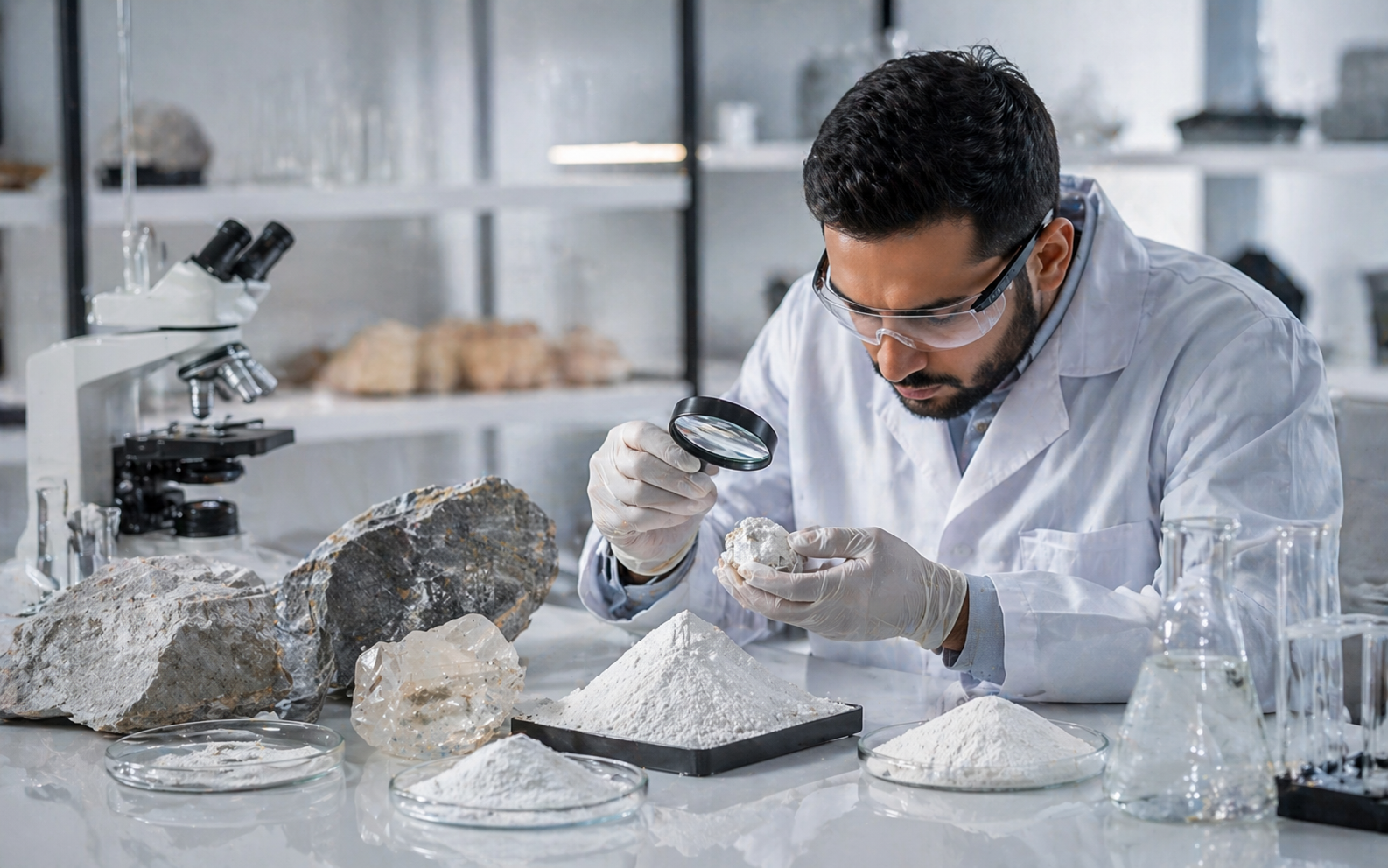
There are many variations of quality control techniques followed to maintain high standards and deliver consistent mineral solutions to global markets, but the core objective remains the same—ensuring purity, reliability, and performance in every batch produced. In the mineral industry, where even minor inconsistencies can impact end-use applications, maintaining strict quality benchmarks is not just a process, but a responsibility.
The Importance of Purity in Mineral Products
Purity plays a critical role in determining the effectiveness and usability of mineral products across industries such as plastics, paints, ceramics, paper, and construction. Impurities can lead to reduced performance, discoloration, or structural weaknesses in final products. Therefore, maintaining high purity levels is essential for manufacturers who aim to build trust and long-term relationships with their clients.
For companies like Shiv Rudra Minerals International, purity is not just a technical parameter—it is a commitment to delivering excellence. Every product, whether it is calcium carbonate or talc powder, undergoes rigorous checks to ensure it meets industry-specific requirements.
Advanced Raw Material Selection
The foundation of high-quality mineral products begins with the careful selection of raw materials. Sourcing from reliable mines and deposits ensures consistency in composition and reduces the chances of contamination. Geological assessments and sampling techniques are employed to verify the quality of minerals before extraction.
This step is crucial because even the most advanced processing techniques cannot fully compensate for poor-quality raw materials. By starting with the best resources, manufacturers can maintain a strong quality baseline throughout the production cycle.
Modern Processing Techniques
Processing plays a vital role in enhancing the purity and usability of mineral powders. Techniques such as crushing, grinding, micronizing, and classification are carefully controlled to achieve desired particle size and consistency.
Advanced machinery and automated systems help in minimizing human error while ensuring uniformity in production. Additionally, the use of contamination-free equipment and controlled environments prevents external impurities from affecting the final product.
Stringent Quality Control Measures
Quality control is the backbone of maintaining standards in mineral manufacturing. Multiple testing stages are implemented—from raw material inspection to in-process checks and final product evaluation.
Laboratory testing includes analysis of particle size distribution, chemical composition, whiteness, brightness, and moisture content. These parameters are essential in determining whether the product meets industry specifications.
Consistency is key, and maintaining detailed records of each batch allows manufacturers to track performance and ensure repeatability. This level of precision is what differentiates reliable suppliers from the rest.
Compliance with Industry Standards
Global markets demand adherence to strict quality and safety standards. Certifications and compliance with international guidelines ensure that mineral products are suitable for export and meet the expectations of diverse industries.
Manufacturers must stay updated with evolving regulations and continuously improve their processes to remain competitive. Compliance not only enhances credibility but also opens doors to new markets and opportunities.
Role of Innovation and Technology
Innovation has transformed the way mineral products are processed and tested. Modern laboratories equipped with advanced instruments enable precise analysis and faster results. Automation and digital monitoring systems further enhance accuracy and efficiency.
Technology also supports sustainability efforts by reducing waste, optimizing energy usage, and improving overall productivity. This integration of innovation ensures that quality is maintained without compromising on environmental responsibility.
Commitment to Consistency and Reliability
Delivering consistent quality is as important as achieving high purity. Customers rely on uniformity in mineral properties to maintain the integrity of their own products. Even slight variations can disrupt production processes and lead to losses.
By implementing standardized procedures and continuous monitoring, manufacturers ensure that every batch meets the same high standards. This consistency builds trust and strengthens long-term partnerships.
Conclusion
Ensuring purity and standards in mineral products is a comprehensive process that involves careful planning, advanced technology, and a strong commitment to quality. From raw material selection to final delivery, every step plays a crucial role in maintaining excellence.
For a company like Shiv Rudra Minerals International, this dedication to quality has been the foundation of its success since 2005. By consistently delivering reliable and high-grade mineral solutions, the brand continues to set benchmarks in the industry and meet the evolving demands of global markets.