
High Purity Calcium Carbonate
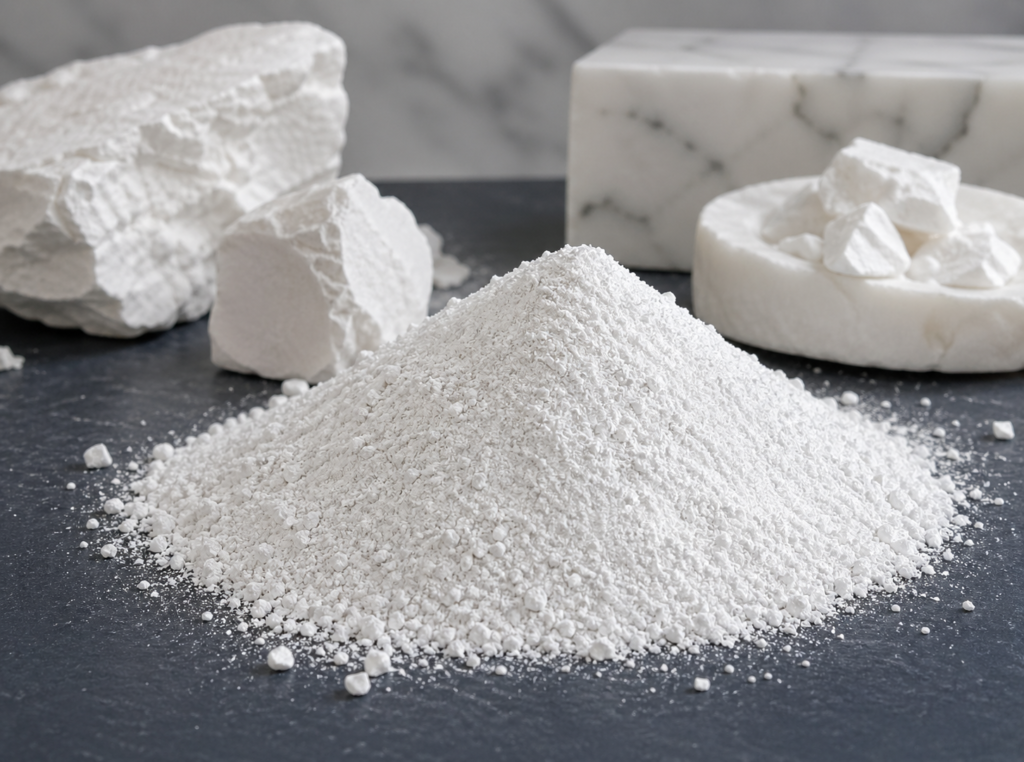
Ground Calcium Carbonate (GCC) from Shiv Rudra Minerals International is a premium-quality mineral powder known for its exceptional whiteness, purity, and consistent particle size. Carefully processed from high-grade limestone, our GCC is widely used across diverse industries for its excellent physical and chemical properties. It enhances product performance by improving strength, smoothness, and durability, making it a preferred choice for manufacturers seeking reliable mineral solutions.
With advanced processing techniques and strict quality control, we ensure uniformity and high performance. Our GCC meets industry standards and supports applications requiring precision, consistency, and superior finish.
- Properties
- Application
- Chemical Composition
Ground Calcium Carbonate (GCC) is widely valued across industries for its exceptional physical and chemical properties. Some of the key characteristics that make GCC highly versatile include:
High Purity: GCC offers excellent purity levels, making it suitable for applications in food, pharmaceuticals, and other quality-sensitive industries.
Fine Particle Size: Its fine and uniform particle structure ensures easy blending, improved dispersion, and enhanced performance in formulations.
Superior Brightness: The naturally high brightness of GCC makes it ideal for paper, paint, coatings, and other applications requiring a clean white finish.
Excellent Whiteness: GCC delivers outstanding whiteness, making it a preferred choice for products where visual appeal and color consistency are important.
Chemical Stability: It possesses strong resistance to acids, alkalis, and various chemicals, ensuring long-term stability in multiple industrial applications.
Low Abrasiveness: GCC is non-abrasive in nature, helping reduce wear and tear on machinery and processing equipment.
Low Oil Absorption: Its low oil absorption properties make it highly effective in paints, coatings, and allied applications.
In addition to these advantages, GCC also offers:
- Improved flow properties
- Enhanced mechanical strength in thermoplastic applications
- Better gloss and whiteness in paints and powder coatings
- Excellent dispersion capabilities
- Prevention of chalking
- Improved corrosion resistance
These unique properties make Ground Calcium Carbonate a reliable and valuable material across a wide range of industrial sectors.
Calcite is widely used across diverse industries due to its excellent functional and cost-effective properties. Some of its major applications include:
- PP Masterbatches, Automotive & Furniture Compounds: Used as a filler to enhance product performance while optimizing production costs.
- LDPE Masterbatches: Improves strength, flexibility, and overall processing efficiency.
- Rigid PVC Pipes: Enhances durability, rigidity, and long-term performance of pipes.
- Leather Cloth Industry: Used as a filler to improve the strength, finish, and durability of leather cloth products.
- Paints, Inks, Powder Coating & Ceramics: Acts as a functional filler to improve consistency, finish, and cost efficiency.
- Rubber Industry: Enhances the strength, flexibility, and durability of rubber-based products.
- Glass & Textile Industry: Used as a fluxing agent in glass manufacturing to reduce melting temperature and improve quality. Also used in textile sizing applications to enhance fabric strength and flexibility.
These are some of the key industrial applications where Calcite plays an essential role.
Calcite powder is available in grades ranging from 300 Mesh to 700 Mesh BSS standards, including micronized grades with top cuts of 5, 10, 15, and 20 microns.
CaCO₃: 90% – 97%
MgO: 1.5% – 2.5%
Silica: 1% – 3.5%
Minor variations in the above specifications may occur due to the natural characteristics of raw materials and environmental conditions. However, these variations do not affect the intended application properties of the product.
Frequently Asked Questions
Find answers to common questions about Ground Calcium Carbonate, including its uses, properties, quality standards, and suitability across industries.
It is mainly used as a filler material in plastics, paints, paper, and rubber industries to enhance product quality.